
Mistakes and Magenta Skies: Sunset over Arches National Park
Magenta Dusk Over the Petrified Dunes
Sunset Over the Petrified Dunes of Arches National Park
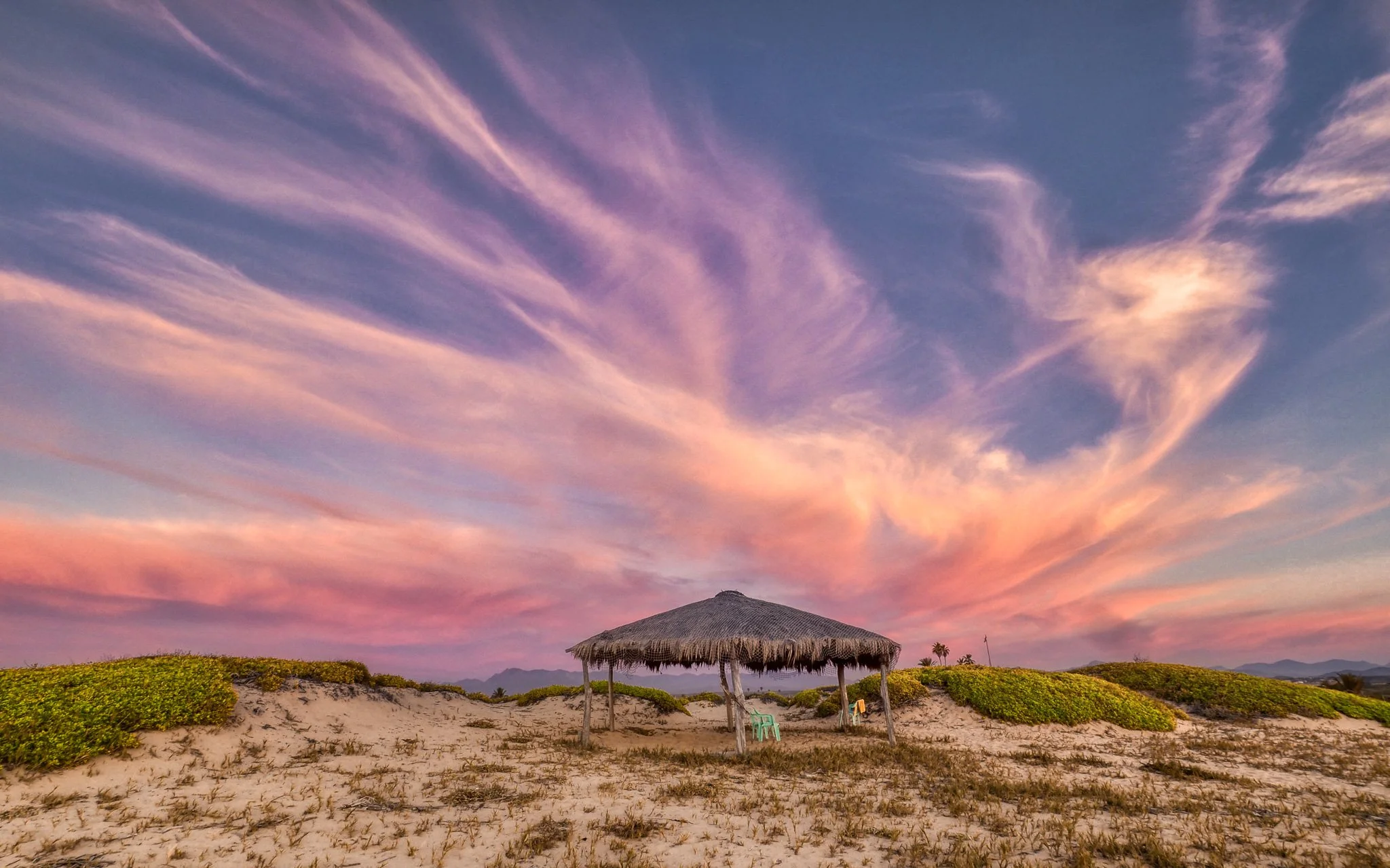
You would think after decades behind a camera, I would know better than to break rule number one of landscape photography: always expect the unexpected. During a winter trip through the Moab region, the weather had been fairly muted for days. I was driving through Arches National Park when, without warning, the high-desert sky completely ignited. Within minutes, purple streaks and fiery orange clouds stretched across the entire horizon. It was one of those rare moments where 100 percent of the overhead canopy illuminated in a brilliant, glowing magenta hue.
Catching Fire in the High Desert Sky
My immediate reaction was a mix of awe and mild panic. In a perfect world, I would have been parked and set up on a sturdy tripod in front of Delicate Arch, Double Arch, Windows Arch or Balanced Rock to anchor the foreground with an iconic silhouette. But light at this intensity is fleeting—it arrives fast and fades even faster. You don't have twenty minutes to hunt down a fresh composition when the sky is peaking. Realizing I had zero time to reach a major landmark, I pulled Joy, my camper van, onto the gravel shoulder, hopped out into the crisp air, and handheld the camera to catch the peak color.
Ancient Sand Captured in Modern Light
Without a massive geological arch in front of me, I tilted the frame upward to let the sweeping, painted cloud textures dominate the scene. Settling below this fiery sky are the Petrified Dunes, a vast expanse of rolling rock formations that often get overlooked by visitors rushing toward the park's main attractions. These ancient mounds are actually fossilized sand dunes from the Early Jurassic period, formed roughly 180 to 200 million years ago when vast desert sand seas swept across the region. Over eons, layers of quartz sand were buried, compressed, and cemented with calcium carbonate to form what we recognize today as Navajo Sandstone.
While I initially kicked myself for missing a classic arch foreground, looking at the frame now tells a different story. The solitary rock spire resting on the horizon gives the glowing sky a subtle, grounded anchor, turning a frantic roadside pull-off into a quiet moment of desert magic.
Explore More of My Adventures
An unexpected winter sunset erupted into a blaze of magenta and gold over Arches National Park. Here is the story of a roadside capture over ancient petrified dunes.