
Palouse Grange Hall
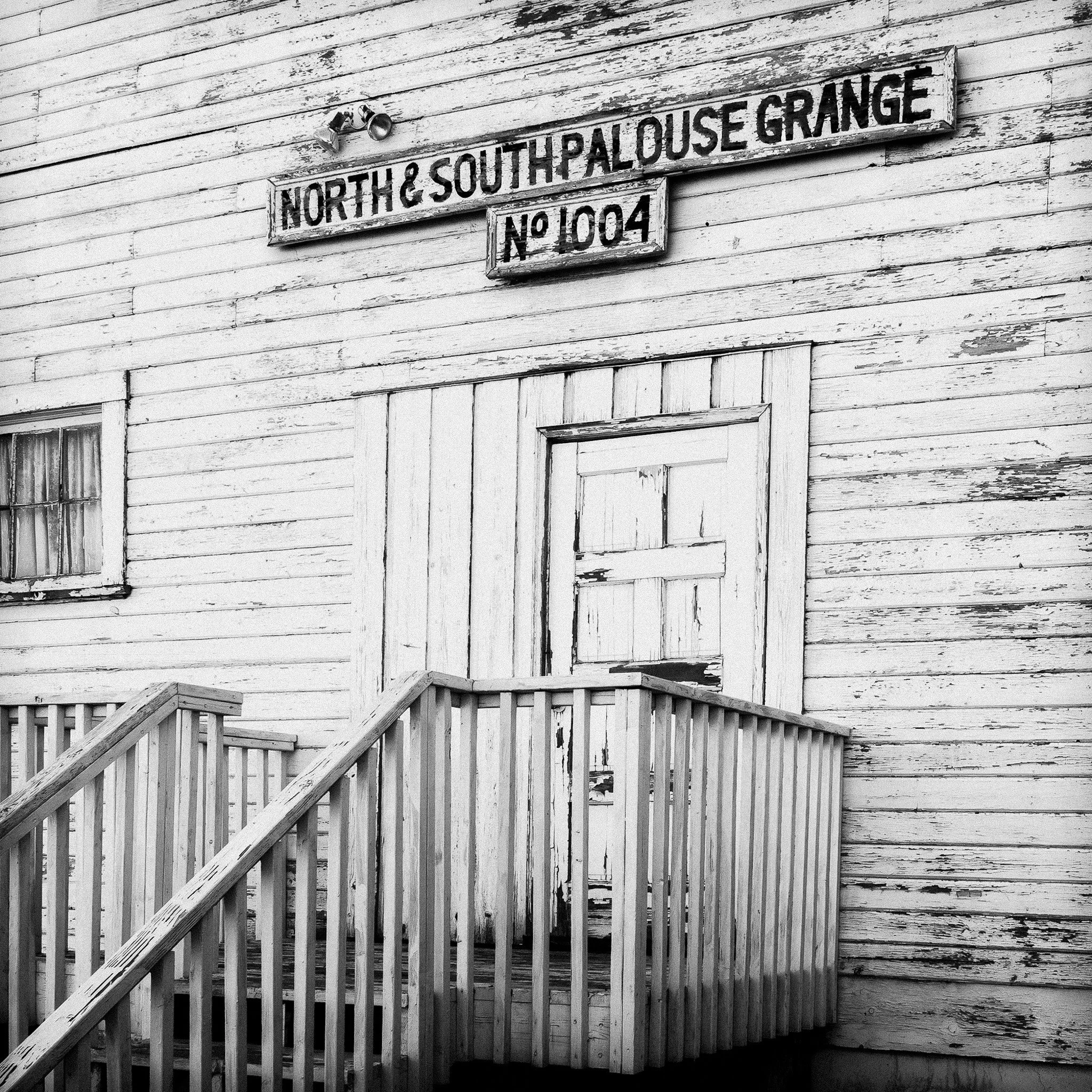
North & South Palouse Grange No. 1004: Black and White Rural Architecture
Heading back toward the Bay Area after a long road trip through the Pacific Northwest, I decided to take a detour through the Palouse region of southeastern Washington. It was my first time visiting this famous stretch of country. Because it was autumn, the iconic rolling hills of green and gold wheat had already been harvested. While I certainly spent time photographing the geometric patterns of leftover stubble in the fields, I found myself equally drawn to the historic rural infrastructure that keeps a farming community running. After all, if you are exploring small-town agricultural country, you have to stop for a classic grange hall.
The Heart of the Palouse Farming Community
The Palouse is an agricultural powerhouse known worldwide for its fertile soil, which produces some of the highest yields of wheat and legumes in the nation. Historically, the National Grange of the Order of Patrons of Husbandry—founded in 1867—served as the social, educational, and political backbone for isolated farming families across the American West. Local chapters like the North & South Palouse Grange No. 1004, located near Palouse, Washington, were where neighbors gathered for town halls, potlucks, dances, and vital discussions on grain shipping rates and such. Seeing the weathered clapboard siding and the hand-painted signage felt like stepping straight into the region's living history.
Composition and Camera Gear Choices
As soon as I walked up to the wooden staircase, I knew this scene needed to be rendered in black and white. Removing color strips away modern distractions and brings out the tactile grit of the peeling paint, the crisp geometry of the porch railings, and a healthy dose of nostalgia. To capture the front facade without stepping too far back into the road, I used my Olympus E-M1 Mark II paired with the M.Zuiko 12-40mm f/2.8 PRO lens set at 13mm.
Shooting Handheld & Camera Settings
I stopped the lens down to f/13 to ensure front-to-back sharpness from the foreground handrail all the way to the upper sign. At ISO 200, my shutter speed dropped to 1/30 of a second. Normally, shooting wide-angle architectural details at 1/30s might make you reach for a tripod, especially after a long day of driving. Fortunately, the in-body image stabilization (IBIS) on the Olympus body easily locked the frame down, keeping every splinter of wood and flake of white paint tack-sharp in the final square crop. Looking back, I could have gone with f8 or even f5.6 to still have a sharp frame with a shorter shutter speed. Next time.
Where the Trail Wanders On
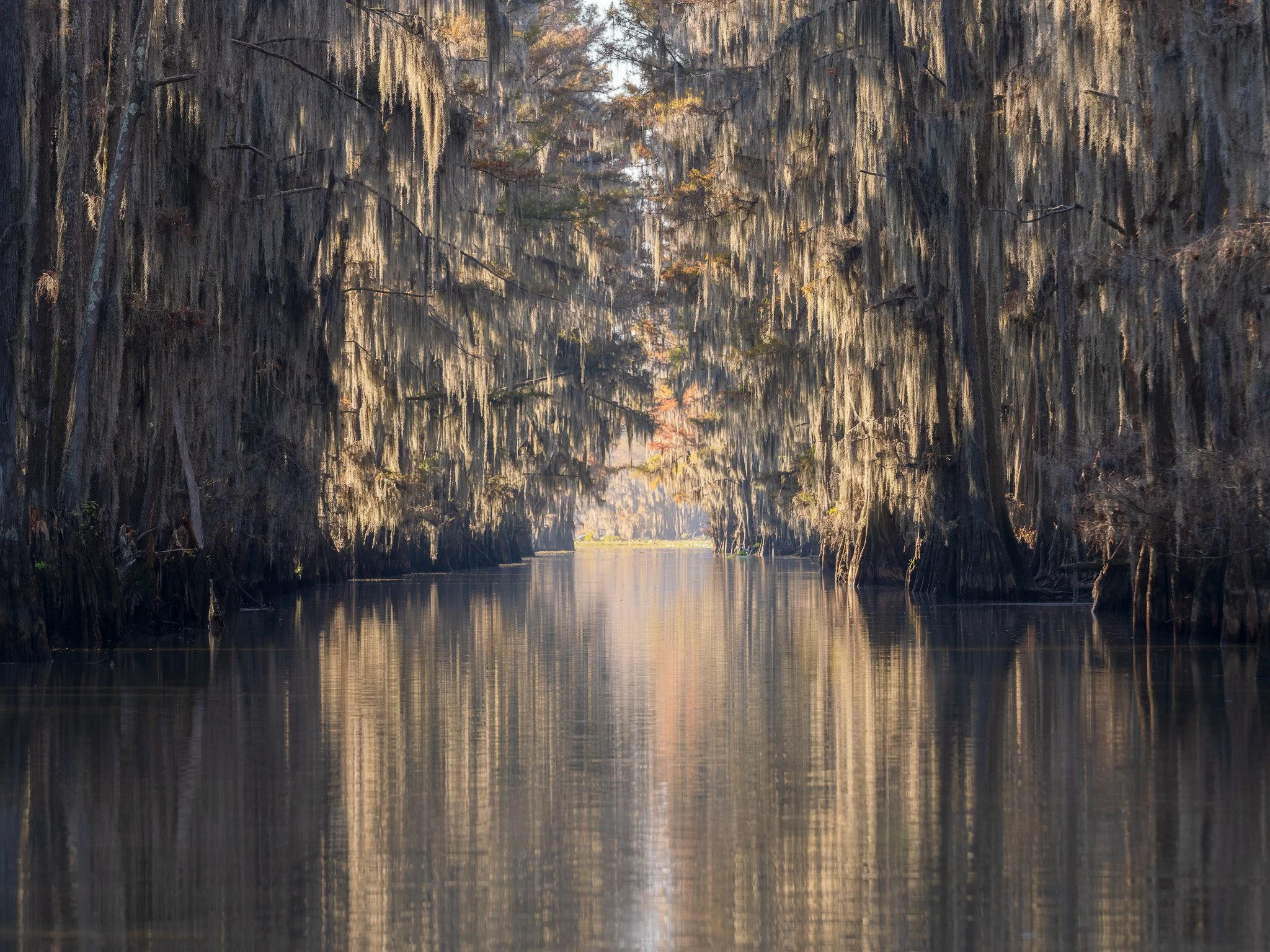
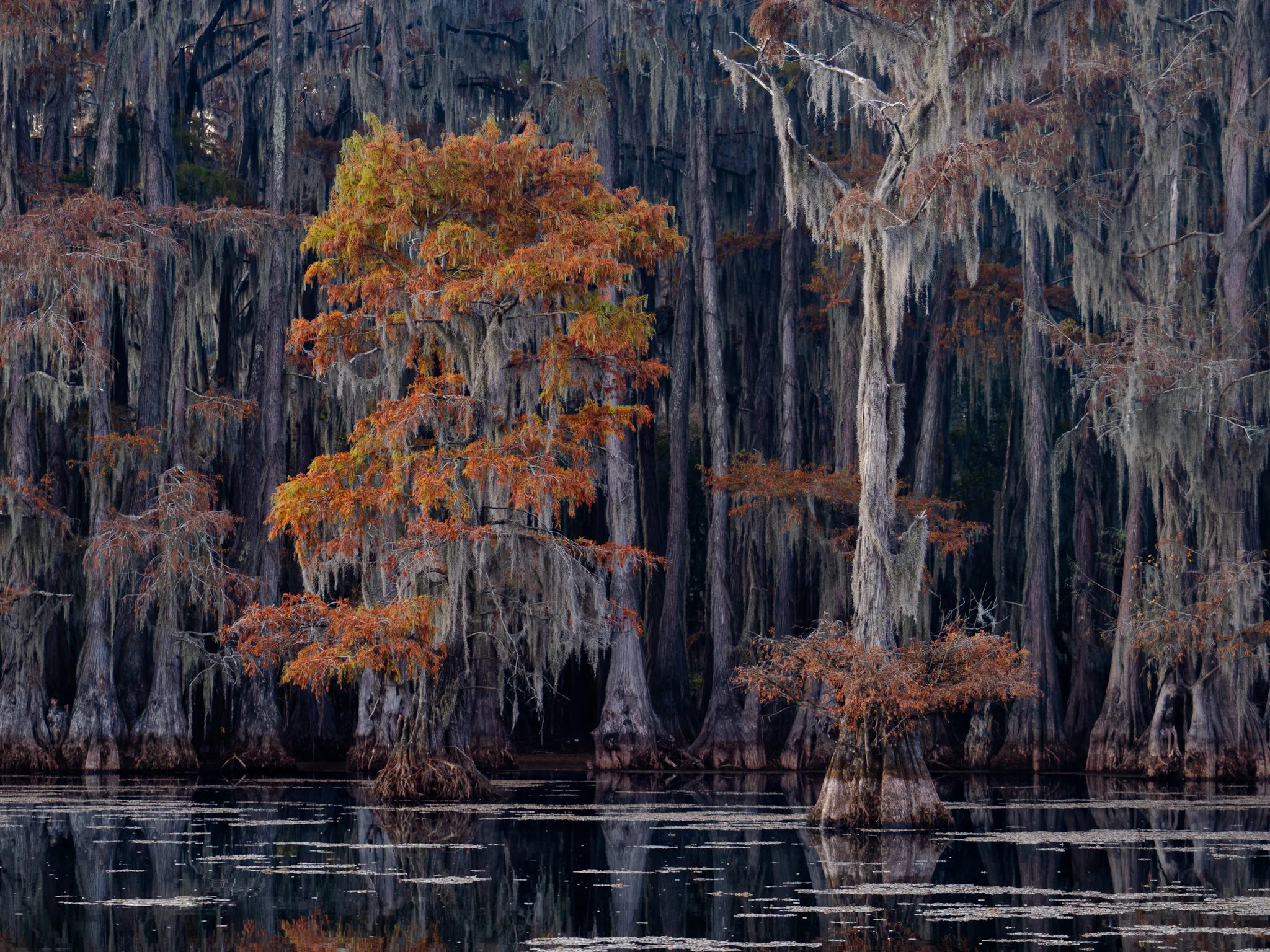
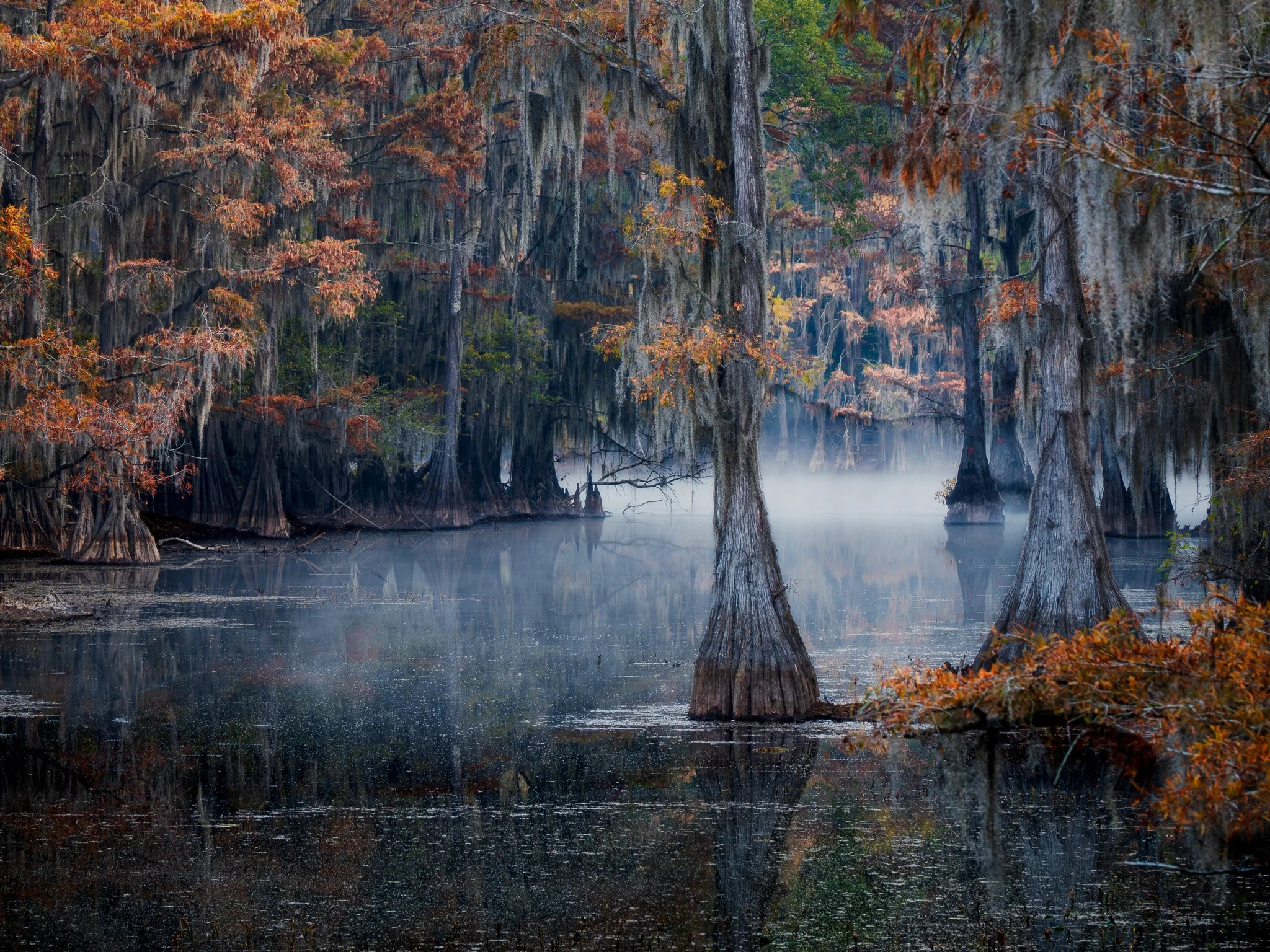
Explore the moody, mist-laden waters of Caddo Lake in Texas. Discover how chaos and order intertwine beneath draped Spanish moss in this fine art landscape.