
Death Valley’s Sailing Stones
Silent Wanderer
27 Miles to Death Valley’s Remote Racetrack
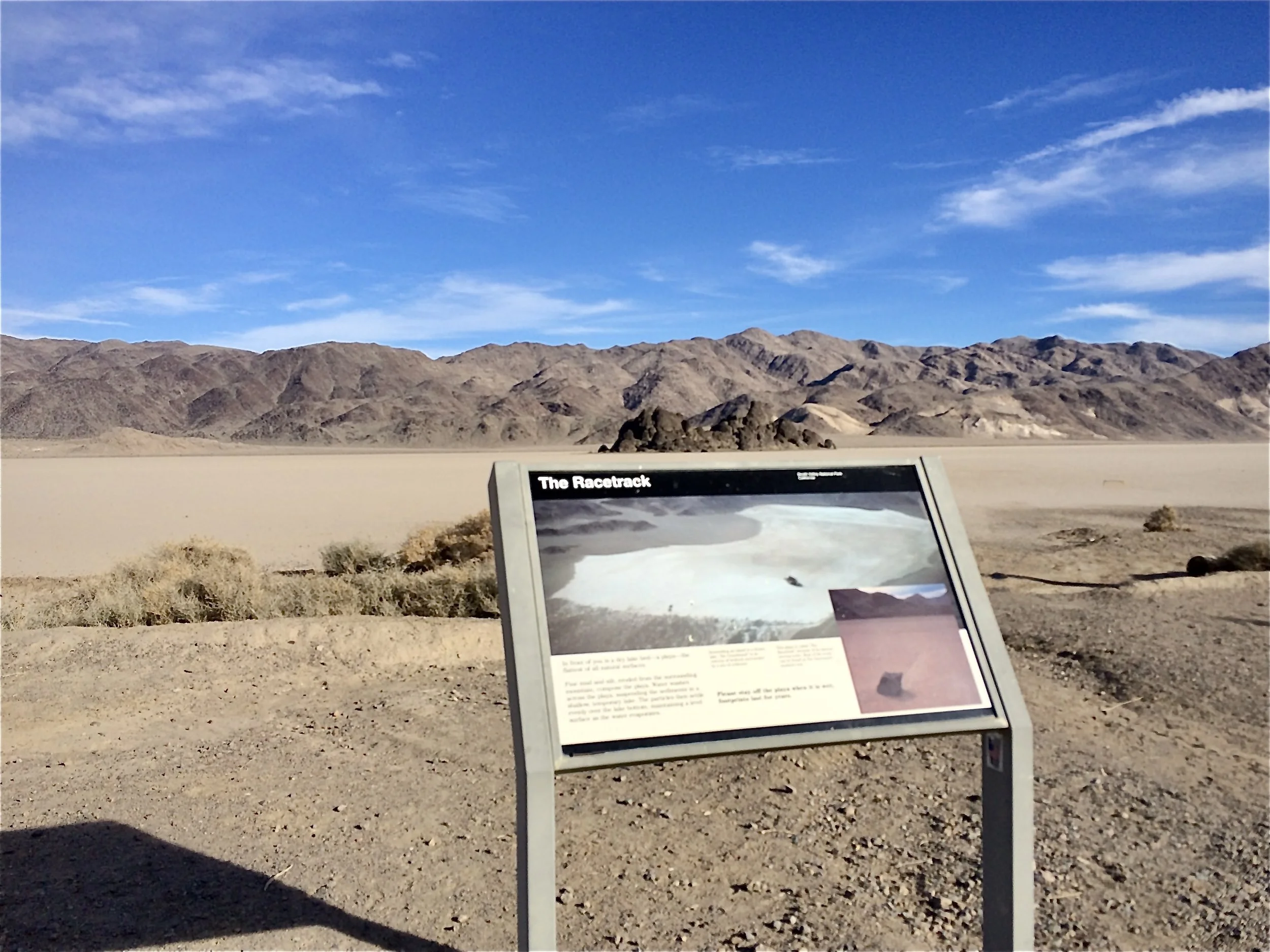
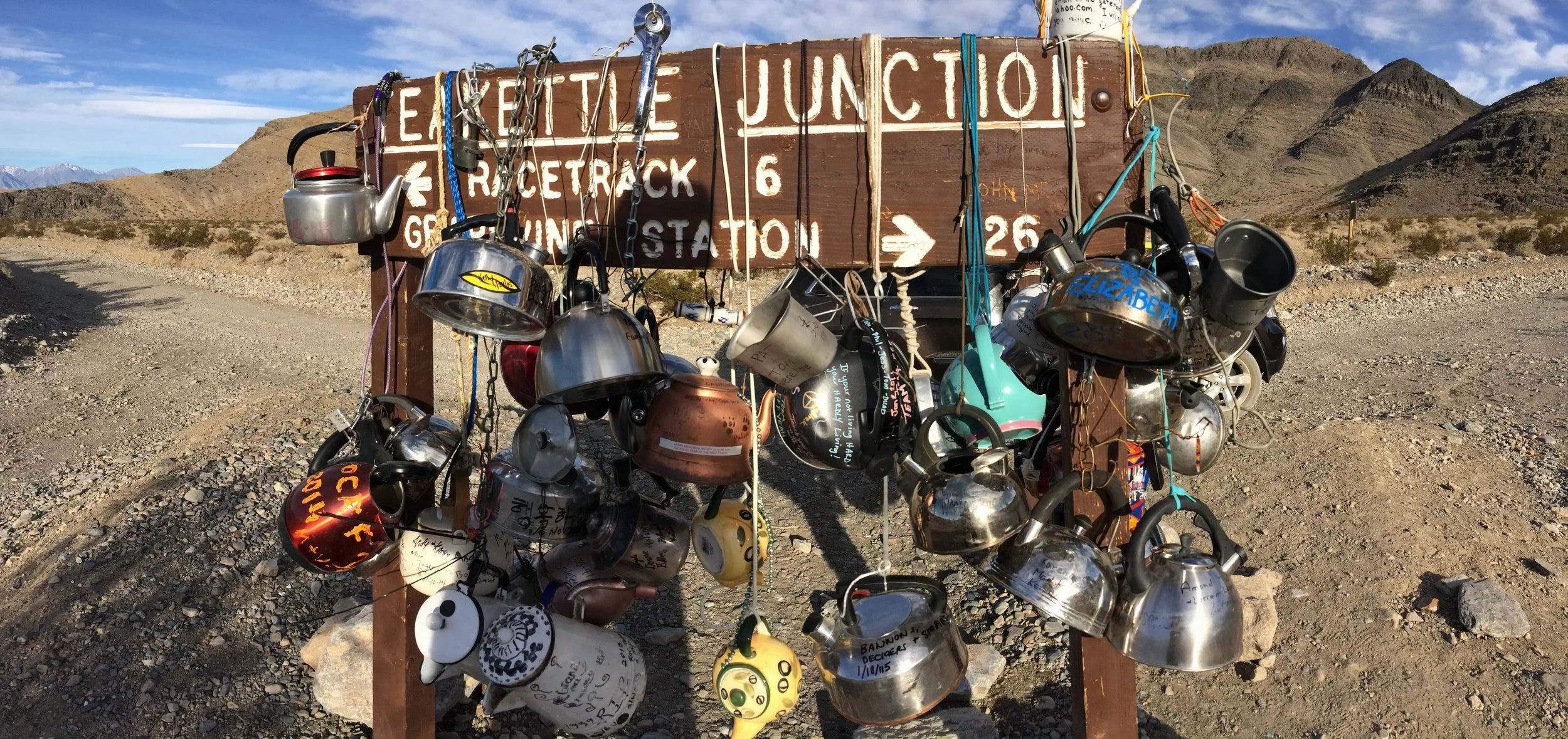
I had heard about the Racetrack Playa and seen photos of its magical, mysterious moving rocks for decades before I finally made my first trek to this backcountry icon in the winter of 2014. My Jeep was brand new to me back then, giving me the capability to navigate the grueling 27-mile stretch of lava-encrusted road. That notorious path has a reputation for shredding vehicle tires and leaving unprepared visitors stranded in the harsh desert. Determined not to become a statistic, I aired down my tires and took it slow, averaging a cautious pace that took nearly three hours. My first glimpse of my destination came at Teakettle Junction, a charming backcountry landmark, in the photo below. From there, looking south, the flat expanse of the playa glistened off in the distance six miles away.
The Search for the Sailing Stones
Knowing from my research that the most dramatic trails concentrate along the southern end, I parked the Jeep, slung on my backpack, grabbed my tripod, and set out across the dry lake bed. Finding the right composition was far more challenging than I anticipated. I ended up walking two or three miles zigzagging across the cracked mud flat, searching for a prominent rock with a clear, sweeping trail. Just as the sun began to dip behind the western hills, I found my composition. The low-angled golden light cast an elongated shadow that created a natural leading line straight to a magnificent dolomite boulder and its winding path.
So I got my shot and experienced The Racetrack for the first time. Another bucket list landscape photography location visited. Then, standing out on that vast, quiet expanse of the playa in the fading light, I was holding so much gratitude inside for all the unforgettable gifts there are in Death Valley National Park.
Unlocking a Geological Mystery
At the time I captured this frame, the exact mechanism behind the "sailing stones" remained one of nature's greatest unsolved mysteries. Geologists had debated for decades whether hurricane-force winds, slick algal blooms, or massive ice sheets drove the movement. Interestingly, scientists from the Scripps Institution of Oceanography solved the mystery. They discovered that rare winter rains form a shallow pond, which freezes overnight into thin "windowpane" ice. When the morning sun breaks up the ice into large floating panels, light breezes push the ice sheets against the rocks, driving them across the slick, muddy surface at an imperceptible crawl.
Explore More of My Adventures



Journey 27 miles down a treacherous backcountry road into Death Valley National Park to discover the mystery of the sailing stones on Racetrack Playa. Explore the story behind capturing this striking black-and-white landscape image at golden hour.