
Sunset View of Channel Islands National Park from Thornhill Broome
Channel Islands Sunset Silhouette
Sunset Across the Santa Barbara Channel
Watching Golden Hour from Thornhill Broome
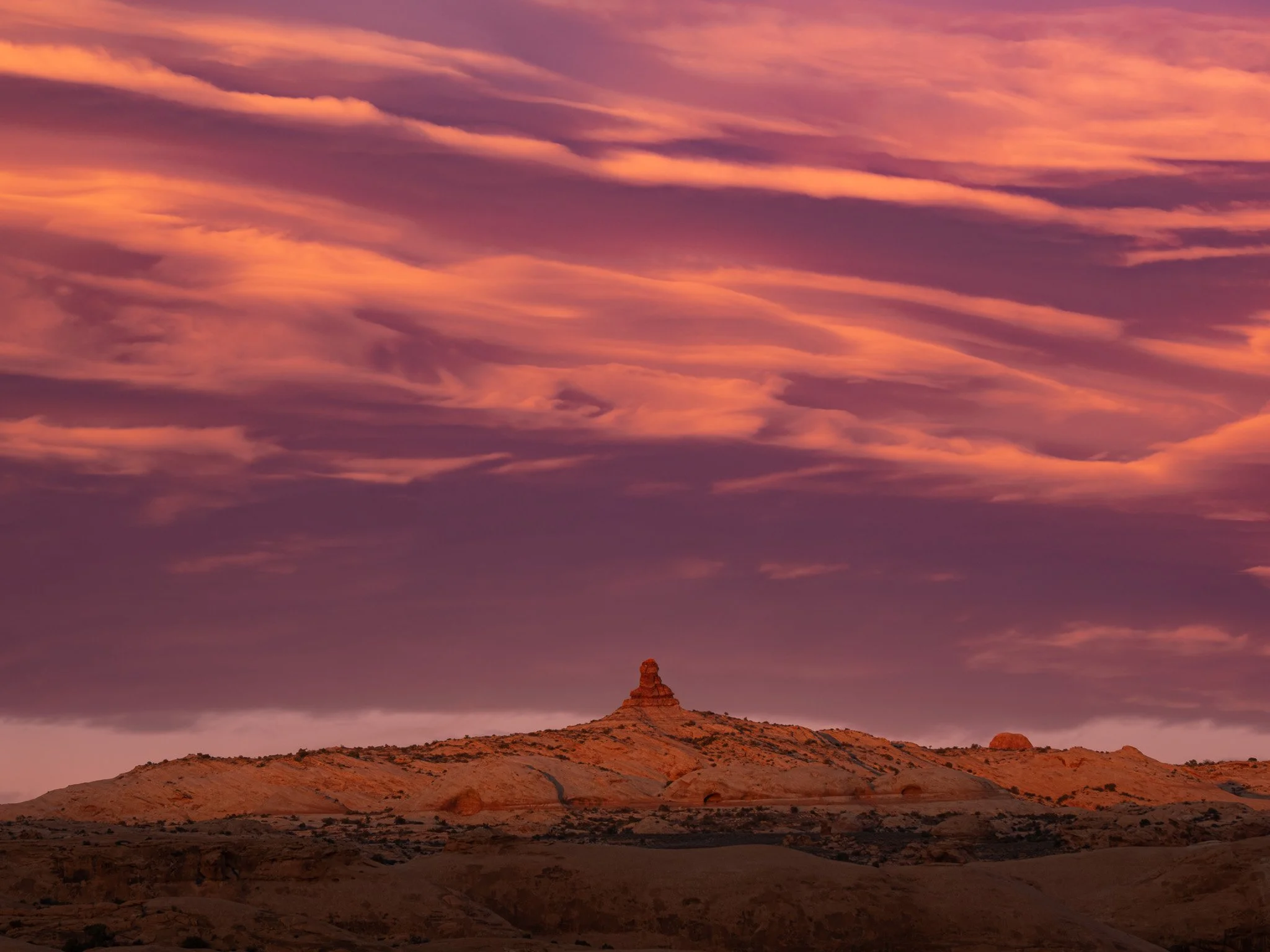
There is something special about camping along the narrow strip of coastal sand at Thornhill Broome State Park. Nestled right where the rugged Santa Monica Mountains drop straight into the Pacific Ocean along Highway 1, it offers an unobstructed front-row seat to the western horizon. On this particular evening, as the sun began its final descent, the marine layer softened and the sky transformed into a glowing canvas of coral, peach, and soft gold. Looking out across the water, the dark, jagged profile of the Channel Islands emerged clearly against the warm gradient of light.
The Isolated Wonders of the Channel Islands
While I have yet to set foot on the islands themselves, viewing them from the mainland offers a captivating glimpse into one of California's most remarkable ecosystems. Channel Islands National Park encompasses five distinct islands—Anacapa, Santa Cruz, Santa Rosa, San Miguel, and Santa Barbara—separated from the mainland by the deep waters of the Santa Barbara Channel. Often called the "Galapagos of North America," this isolated archipelago has evolved in relative isolation for thousands of years. The park protects over 2,000 species of plants and animals, including more than 145 species found nowhere else on Earth, such as the tiny island fox and the island scrub-jay. Seeing their rugged silhouettes anchored in the Pacific at dusk highlights the wild isolation that makes this national park so unique.
Technical Choices and Composition
From a photographic perspective, scenes like this test your ability to balance high-contrast light. As the sun neared the ocean line, the sky maintained a bright, luminous glow while the islands dropped into deep shadow. To capture the full subtle tonal range in the clouds without blowing out the highlighted edges, I dialed in my exposure to protect the highlights and let the landform form a clean, graphic silhouette. A medium telephoto focal length allowed me to compress the scene, drawing the distant volcanic contours of the island closer while smoothing out the gentle swell of the Pacific in the foreground.
Moments like these remind me why I keep hitting the road and pitching camp along the coast. It isn't just about coming home with a sharp image; it is about standing on the shoreline, feeling the cool ocean air roll in, and watching the last light of day warm the Pacific sky.
Explore More of My Adventures
Watch the warm golden hour sunset unfold over Channel Islands National Park as seen from Thornhill Broome Beach along the Pacific coast.