
Boot Arch: Twilight and Textures in the Alabama Hills
Twilight at Boot Arch, Alabama Hills
Chasing Shadows and Pastel Skies Among the Iconic Boulders of Alabama Hills
There is a distinct kind of magic that happens when you spend enough time wandering the labyrinth of whimsical rounded granite boulders at the base of the Eastern Sierra. While most visitors make a beeline for Mobius Arch, Crab Arch or the grand vistas of Mount Whitney and Lone Pine Peak, the Alabama Hills hold endless smaller secrets if you are willing to look past the main trailheads. Setting up camp here means you can track the shifting light as it rakes across the weathered monzonite rock, turning ordinary stone into deeply textured foregrounds.
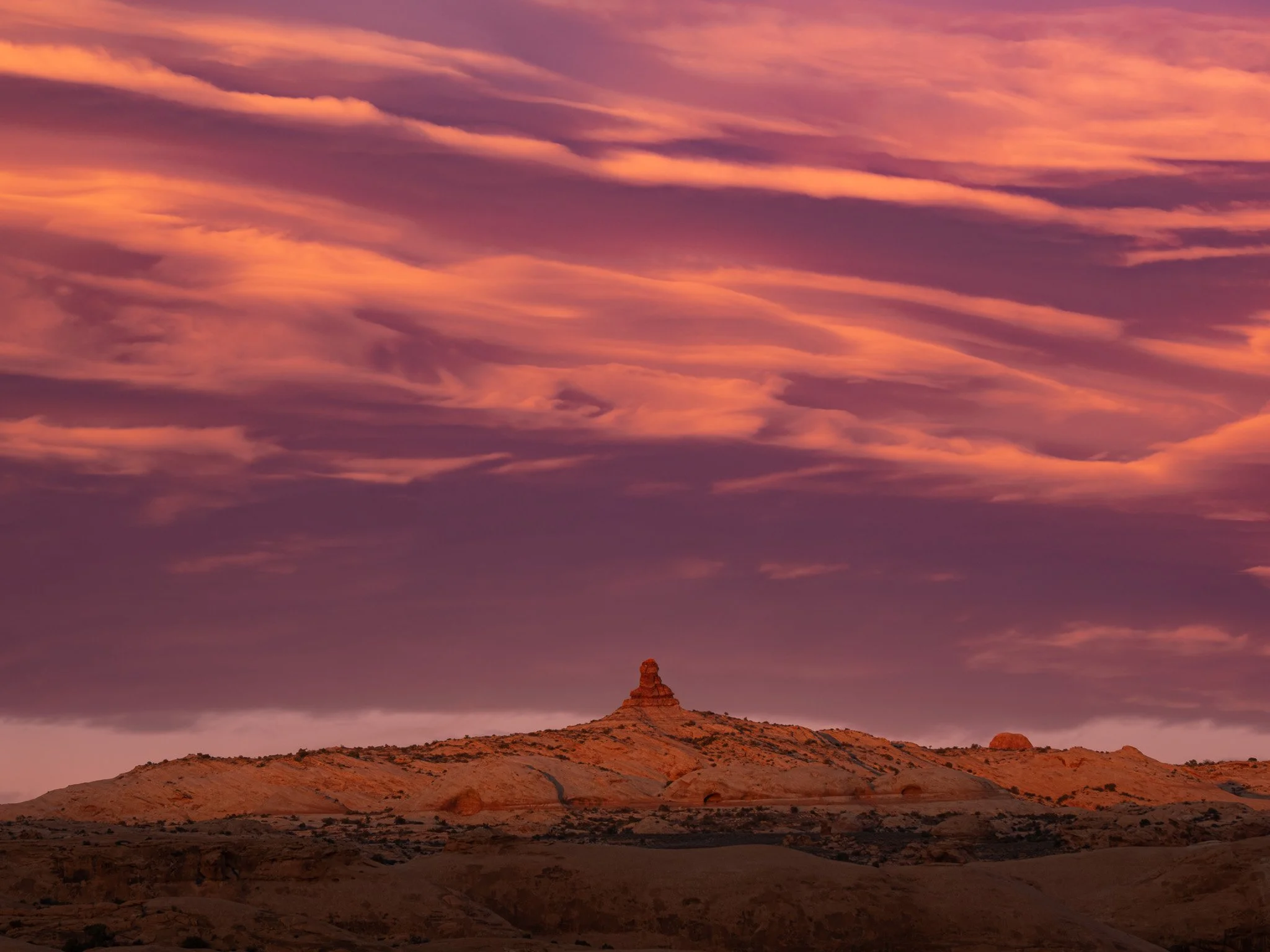
On this particular evening, the air was still, and the sky began to transition into a gorgeous, delicate wash of pastel purples and muted pinks just after sunset, wrapping the desert landscape in a serene quietude. Working the composition here required getting low to anchor the frame with the deeply cracked foreground boulders, letting the eye naturally sweep upward along the natural leading lines toward the distinctive stone loop of Boot Arch silhouetted against the lavender sky.
Alabama Hills earned its unusual name back during the Civil War in 1864, when Southern sympathizers prospecting for gold named their local mining claims after the Confederate warship CSS Alabama. Decades later, Hollywood discovered this dramatic backdrop just off Highway 395 near Lone Pine, utilizing the terrain as a rugged stand-in for the American West, alien planets, and ancient battlefields across hundreds of classic films. Hollywood made use of thid location so much that the mail road through it is named “Movie Road”. In the nearby town of Lone Pine the local business pay homage to the stars of those glory day; John Wayne, Roy Rogers and so many others who made films there.
Explore More of My Adventures

See how 10.4 hours of exposure time from a suburban Texas backyard revealed the iconic Pillars of Creation inside the Eagle Nebula using the Vespera Pro.