
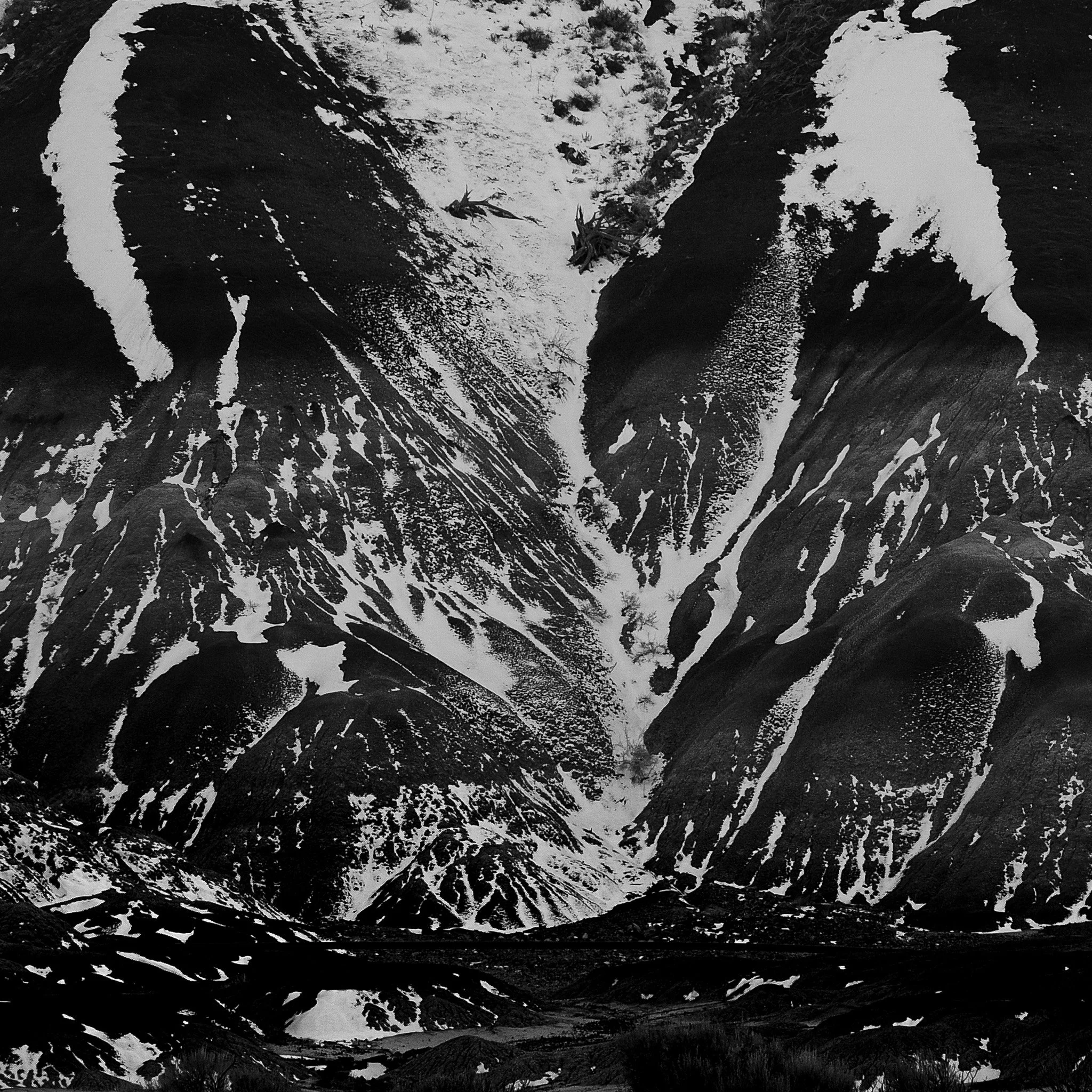
20 Mule Team Road in Black and White
Winding Through 20 Mule Team Road in Death Valley
Shadow and Light in Death Valley Badlands
Before I upgraded to Joy, my camper van, back in 2019, I used to explore Death Valley in my trusty, dearly departed Jeep. Every time I wrapped up a sunrise shooting session at Zabriskie Point, I had a specific routine. I would drive a couple of miles up the main highway and turn onto 20 Mule Team Road. Some folks call it Borax Road. It is a fantastic short dirt trail that weaves directly through some of the most dramatic, sculpted badlands in the entire park.
Even though it is an unpaved track, the road is always in surprisingly good shape. These days, Joy handles the winding path with ease, though I still miss the raw Jeep days now and then. On this particular morning, I pulled over along a narrow bend to scramble up the surrounding hills, hunting for a fresh composition that captured the scale of the landscape. Converting the final image to black and white felt like the only right choice. Stripping away the color forces your eyes straight to the deep textures, harsh shadows, and the leading line of the road curving through the mudstone.
The Star Wars Legacy of Twenty Mule Team Canyon
20 Mule Team Road is not just a scenic drive; it is deeply tied to the industrial history of the American West. During the late 1880s, large teams of 18 mules and two horses pulled massive wagons loaded with refined borax out of Death Valley. They hauled tons of "white gold" over 165 miles of harsh desert terrain all the way to the nearest railroad stop in Mojave.
Star Wars fans might recognize these pale hills. George Lucas filmed scenes for Return of the Jedi right here in Twenty Mule Team Canyon, making it the fictional home of Jabba the Hutt's palace on Tatooine.
Explore More of My Adventures
Discover the rich history and dramatic shadows of 20 Mule Team Road in Death Valley. Learn how black and white photography brings out the ancient textures of this legendary desert drive.