
Liquid Gold on El Capitan: Photographing Yosemite’s Natural Firefall
Every year during the late days of February, even though it is still technically winter, photographers and nature lovers flock to Yosemite Valley for one specific, elusive event. As the sun sets, if conditions are optimum, its rays hit Horsetail Fall on the eastern face of El Capitan at just the right angle, setting the cascading water ablaze in brilliant shades of deep orange and yellow. Catching this phenomenon requires a delicate alignment of nature: the sky must be clear enough for the setting sun to drop beneath the clouds, and there must be enough winter snowpack melting to keep the ephemeral waterfall flowing.
The main event itself is remarkably fleeting, lasting only about five minutes from start to finish. Because of that tight window, preparation is everything. I rolled up in my camper van around 3:00 PM to stake out a solid spot and set up my tripod just thirty feet away. As sunset approached, the quiet valley floor steadily filled with expectant onlookers—a mix of casual visitors holding up iPhones and seasoned photographers hovering over heavy glass—all watching the cliffside and waiting to see if the weather would cooperate. Everything aligned perfectly, and the cliff lit up right on cue.
Setting Up My Shot
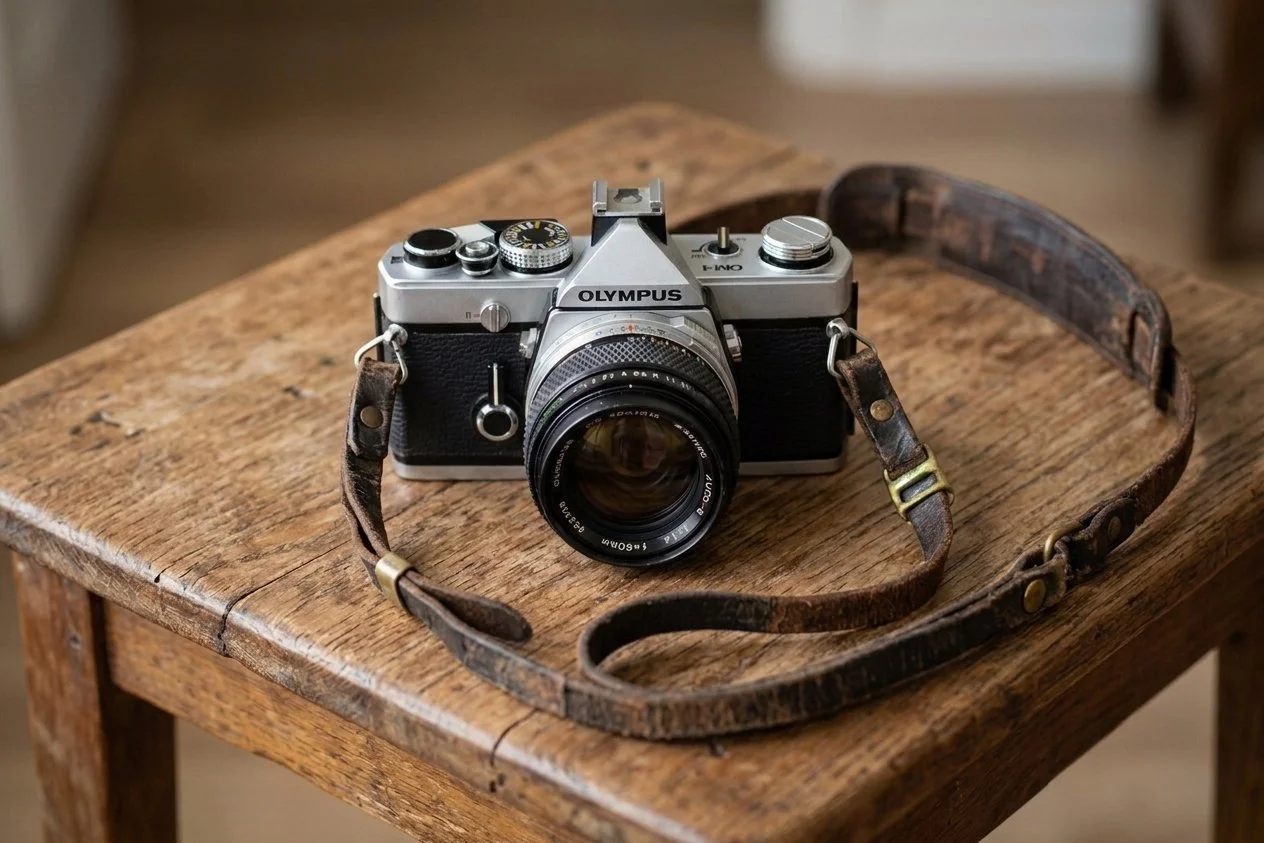
Due to the capture window being so short, I had to figure out ahead of time what my camera settings should most likely be to get the feel I was looking for. From previous experience, a shutter speed of ¼ second is my sweet spot for falling water, so I started there. ISO was 200, the base ISO of the OM-1 and I used a moderate aperture of f5.0 to help nail focus of the cliff as well as the pine branches, which were much closer to the camera. I also was clear that I didn’t need a wide angle shot from my vantage point so used my Olympus 40-140mm f2.8 Pro lens at 48mm, which framed horsetail fall on the cliff face perfectly.
Nostalgia and Natural Wonders in Yosemite Valley
Seeing Horsetail Fall glow brought back a wave of personal history for me. I’ve been fortunate enough to photograph this natural illusion twice before: once about five years ago, and another time roughly twenty-five years ago on film using my medium format Bronica camera. Many people naturally compare the Horsetail Fall effect to the historic Yosemite Firefall, but the two could not be more different in origin. The original Firefall was a man-made spectacle where hot embers from a massive bonfire atop Glacier Point were pushed off the edge, falling thousands of feet to the valley floor.
I actually remember watching the original Firefall as a young boy back in the mid-1950s while on a family vacation, standing in the meadow outside the historic Ahwahnee Hotel. Pushing tons of burning red coals over a granite cliff inside a national park obviously isn't a sustainable environmental practice, so the park service wisely ended the tradition in 1968. It wasn't until Galen Rowell famously photographed Horsetail Fall in 1973 that word began to spread, giving birth to this modern, purely natural "pseudo-firefall" that continues to captivate visitors every February.
Explore More of My Adventures
Experience the magical natural Firefall at Yosemite's Horsetail Fall as golden sunset light transforms the cascading water on El Capitan into liquid fire.