
The Mystery of the Zooming Rocks: Death Valley’s Racetrack Playa
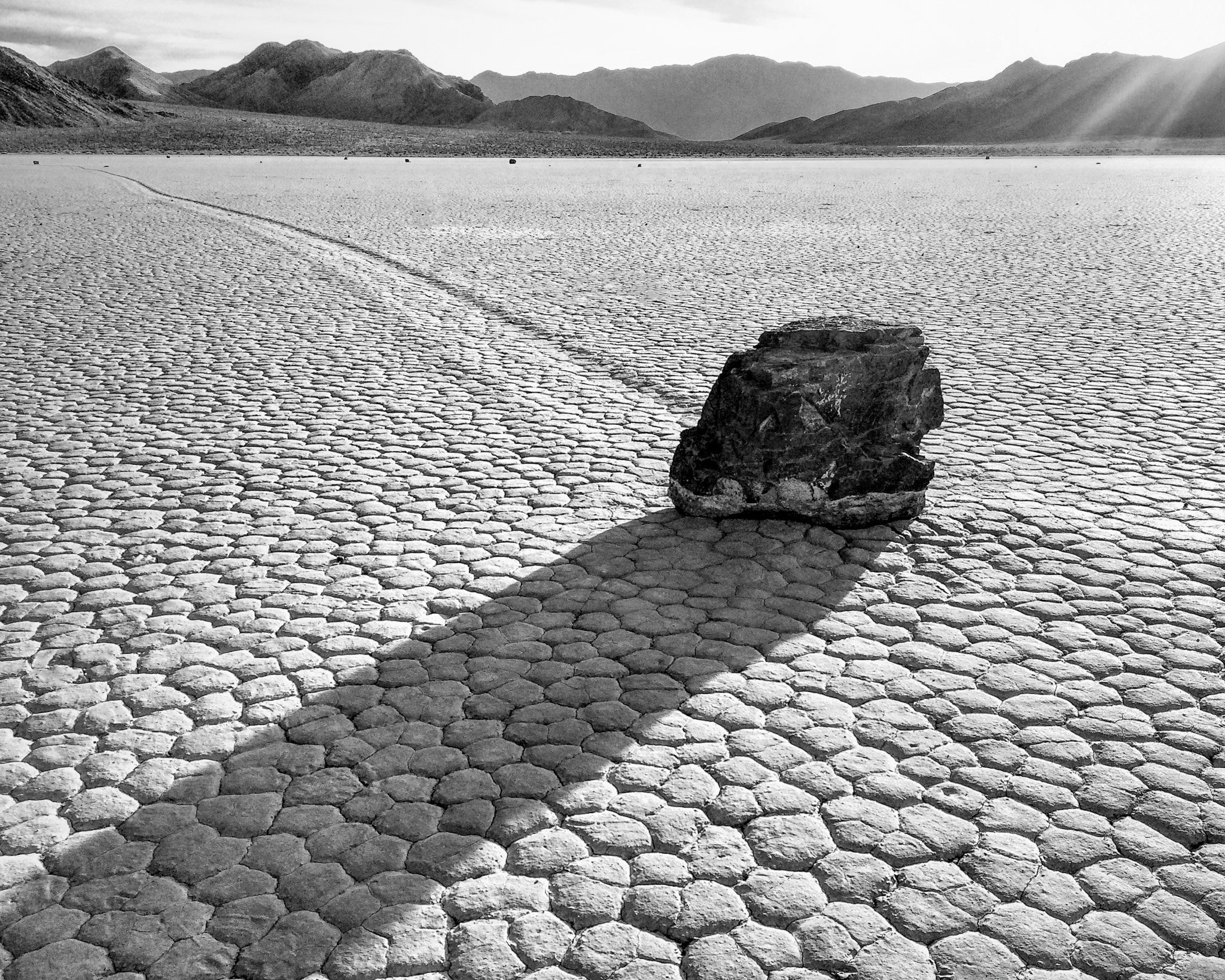
Zooming Rock at Dusk, Racetrack Playa
A Journey Across Death Valley’s Most Enigmatic Lakebed
Reaching the Racetrack Playa in Death Valley National Park isn't a casual Sunday drive. It requires navigating 27 punishing miles of washboard dirt, sharp lava rocks, and scattered Joshua trees—a stretch of road famous for chewing up tires and stranding unprepared vehicles. Back in 2014, right after acquiring my Jeep, this remote lakebed was at the very top of my bucket list. The journey out takes you past Teakettle Junction, a surreal desert landmark where travelers from around the globe hang engraved tea kettles adorned with messages and social media handles. Strangely enough, it was also the only place in the area where my cell phone picked up a very useable signal with AT&T.
Once on the expansive, dried-mud surface of the playa, finding the legendary "sailing stones" takes some footwork. The lakebed stretches nearly three miles long and sits at an elevation of 3,608 feet, framed by the steep slopes of the Cottonwood Mountains. I trekked a mile or two around the southern end of the playa, where dark dolomite stones break off the surrounding cliffs and tumble onto the clay floor. While I spotted a few rocks early on, most lacked clear movement tracks. Then I stumbled upon this extraordinary candidate—a heavy rock anchored at the end of a deep, beautifully carved trail reaching back across the cracked clay tiles.
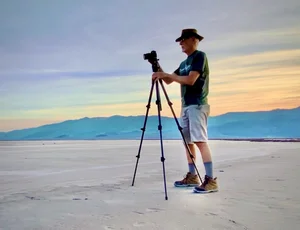
To capture the scale and texture of the scene, I set up my camera low on a tripod to maximize the size of the rock and emphasize the deep furrow left in its wake. The sun had just dipped behind the hill, casting a soft glow across the mud flats and painterly purple and gold hues across the sky. Back when I captured this image 12 years ago, how these massive stones moved across flat ground remained a compelling mystery. Not long after that first visit, researchers studying the playa over the winter finally cracked the code: under very specific weather conditions, brief shallow rain ponds freeze overnight into wafer-thin ice sheets they call window pane ice. As the sun thaws the ice during the day, high wind conditions push the ice sheets—and the embedded stones—across the slick mud, leaving clear tracks behind.
Although I've returned to the Racetrack Playa twice since this maiden trip—once enduring brutal 50 mph winds that made photography impossible—that first visit remains unmatched. Not wanting to waste any photographic opportunity I ended up staying out late to photograph other Sailing Stones under the light of the full moon. Those images are for sharing another day but staying late into the night under the light of a full moon created memories, and images, that have remained personal favorites ever since.
Explore More of My Adventures

An unexpected winter sunset erupted into a blaze of magenta and gold over Arches National Park. Here is the story of a roadside capture over ancient petrified dunes.