
Crescent Moon and Earthshine Over the Gaviota Coast
A Crescent Moon Glows Across the Pacific Horizon
A Quiet Evening along Highway 1
Who doesn't love the California coast? During my first five years traveling in my camper van, I spent a substantial amount of time exploring California's shoreline. On this particular evening, I was heading south along Highway 1—the iconic Pacific Coast Highway. I pulled into one of my favorite turnouts along the Gaviota Coast to set up camp for the night. Tucked behind a small hillside, the site provided a peaceful shield from highway traffic noise. While roadside overnighting in this specific pull-off has since been restricted, back then it offered a quiet front-row seat for vanlifers and other RVers to the sunset and the Pacific Ocean.
Understanding the Glow: The Science of Earthshine
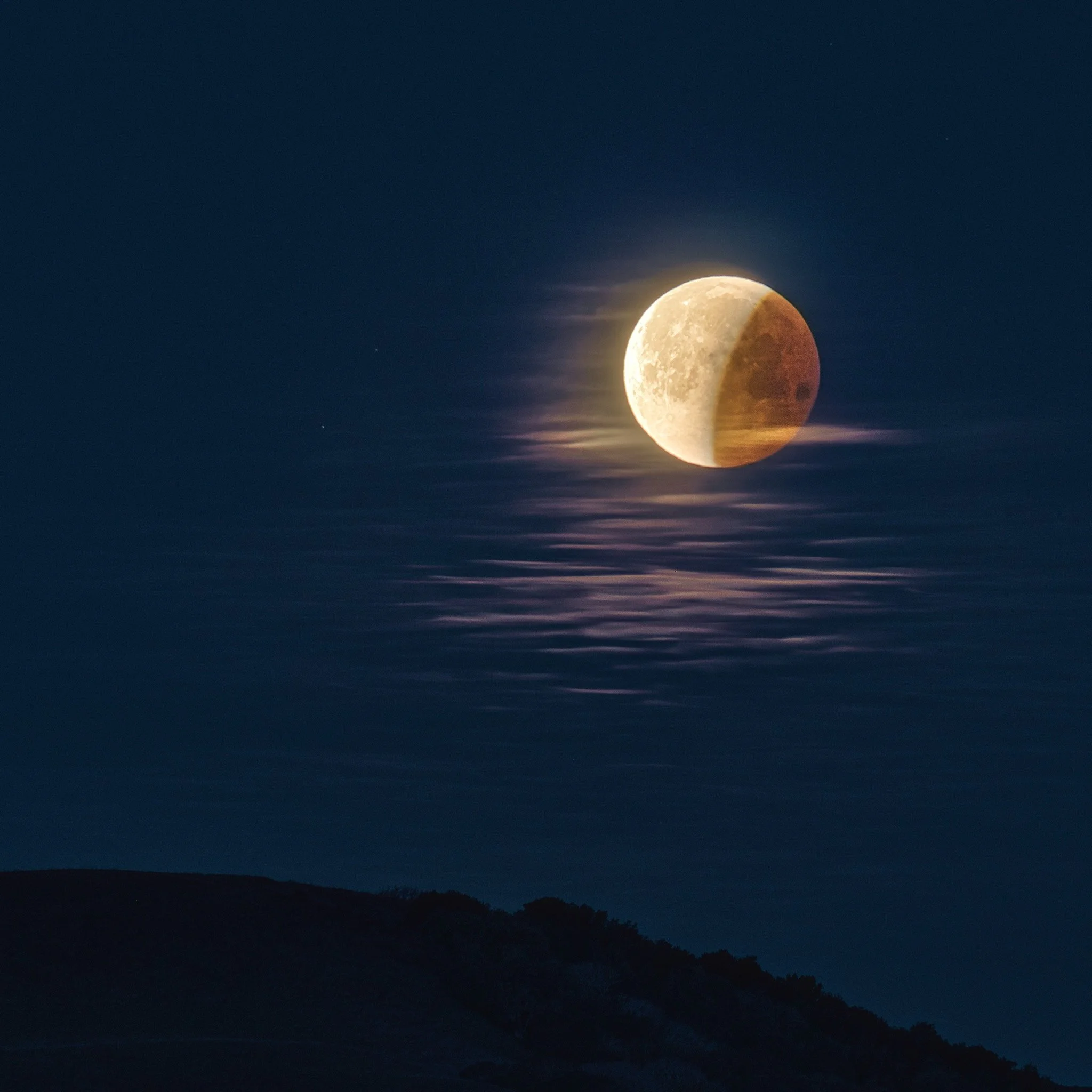
As dusk settled, a brilliant crescent moon hung just above the horizon, accompanied by an unusually intense display of earthshine illuminating the shadowed lunar terrain. Earthshine—often called the "Da Vinci glow" after Leonardo da Vinci first explained the phenomenon in the 16th century—occurs when sunlight reflects off Earth's surface and atmosphere, bouncing onto the unlit portion of the moon and back to our eyes. Its brightness varies depending on Earth's cloud cover and ice reflection across the hemisphere facing the moon at that exact time. On this clear night over the Pacific, conditions aligned to show off lunar detail in a spectacular way, usually hidden in shadow.
Coastal History and Shooting Technicals
The Gaviota Coast represents one of the longest continuous stretches of undeveloped rural coastline remaining in Southern California, preserving native Mediterranean ecosystem bluffs and rich marine habitats. Capturing this low-light high-contrast scene required careful exposure balancing: while I was unable to preserve details in the brilliant highlight of the sunlit crescent, I was really after capturing the amazing earthshine, which meant keeping the shutter open long enough (4/5 second @f2.8) to draw out the faint, earthy glow on the dark side of the moon and its soft golden reflection glittering across the water.
Explore More of My Adventures

Discover the story behind the historic 1917 Elberta Sinclair Station in rural Utah, a relocated mining-era relic captured along Highway 6.