
Caddo Lake Cormorants: Wildlife Photography in East Texas
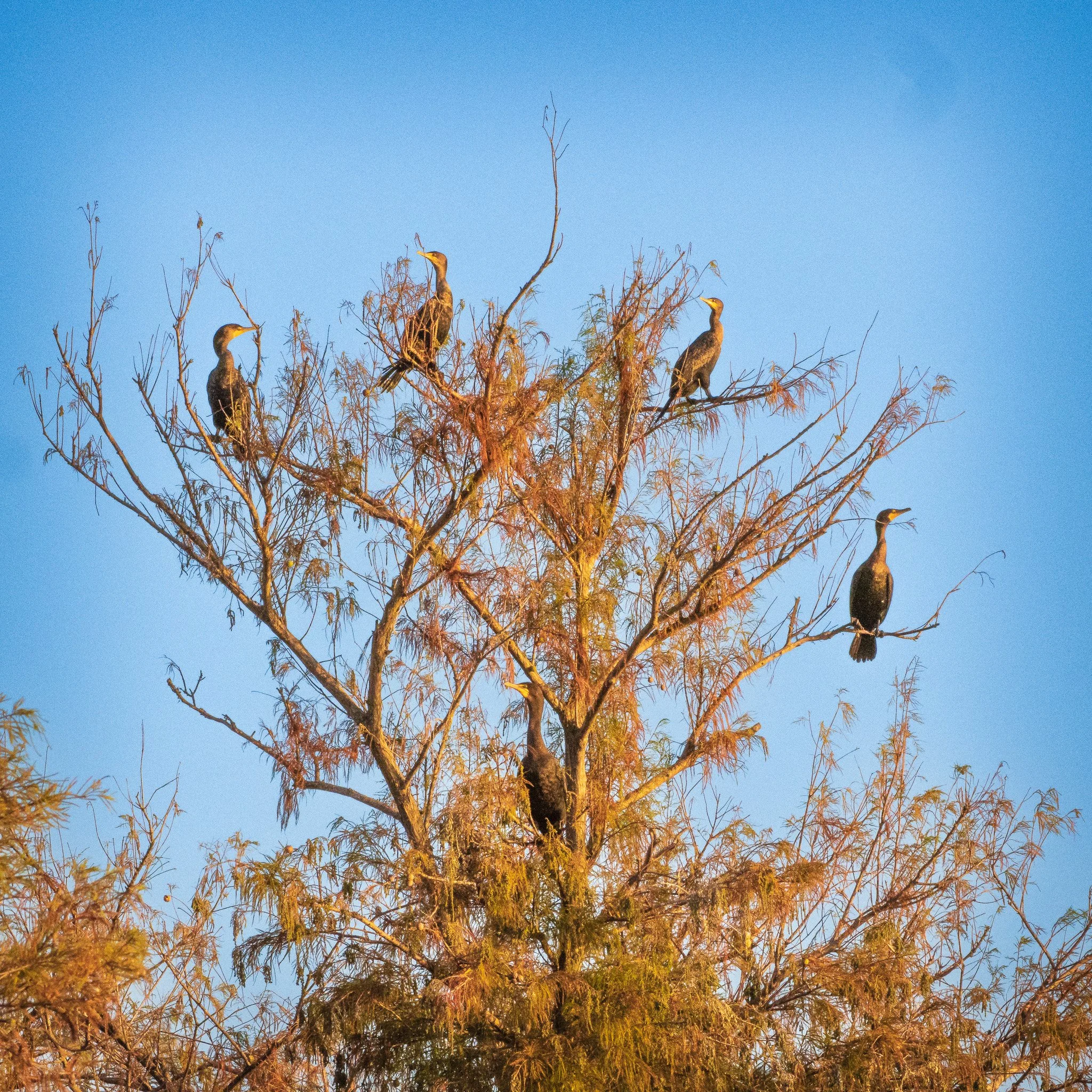
Cormorants Resting on a Bald Cypress at Caddo Lake
Crown of the Swamp: Cormorants Atop Caddo Lake's Ancient Cypress
CADDO LAKE CORMORANTS
Entering the Labyrinth of East Texas
I didn't go to Caddo Lake, which straddles the border of East Texas and Louisiana, looking for a traditional bird-watching expedition. It's the creepiness of the bald cypress trees draped in Spanish moss that lured me out there in the first place. There is an eerie, timeless quiet to the water channels that feels like stepping backward into another era. But once I hired a local boat captain to take me out deep into the middle of the labyrinthine lake one evening, I was completely gobsmacked by the sheer scale of the avian activity. Egrets, herons, and cormorants were everywhere, turning the flooded basin into a bustling wilderness hub.
I had hired the captain to take me primarily to places among the Cypress to capture more interesting and unique compositions than I otherwise found just by walking the shore and Jetty of Mill Pond. We did plenty of that and I got some wonderful images, so mission accomplished. Then he took me where the birds are. I traded my wide angle lens for my 100-400mm and captured so many more wonderful wildfile images.
Technical Details and Composition
Capturing wildlife from a floating boat requires a nimble setup and a steady hand, which is why I relied on my OM System OM-1 paired with the M.Zuiko 100-400mm lens. I zoomed in to 169mm for this shot to isolate this cluster of cormorants perched high on the upper branches of a sunlit bald cypress. To freeze any movement from the boat and the subjects, I dialed in a shutter speed of 1/1000th of a second at f/11, keeping the ISO at 640 to maintain clean shadow detail in the dark plumage of the birds against the bright evening sky. It was really sweet catching all the wildlife behaving naturally high above the water line.
The Ecology of Caddo Lake
Straddling the Texas-Louisiana state line, Caddo Lake is named after the Caddo Native Americans who lived in the area until they were “removed” in the 19th century. Geologically, the lake is famous for being one of North America's largest flooded forests, dominated by massive bald cypress trees (Taxodium distichum) that can live for hundreds—if not a thousand—years. These trees thrive in standing water thanks to their specialized "knees," which project upward from the root system. The rich ecosystem provides an essential rookery for colonial waterbirds like the double-crested cormorants seen here, making it a premier destination for anyone looking to document the untamed side of the American South. And of course, I'll be posting more wonderful photos of all the bird life on Caddo Lake in future Photo of the Day posts.
Explore More of My Adventures




The Three Gossips in Arches National Park for a winter photo session. No snow, but incredible clouds and light started the trip to Moab, Utah.